Skip to content

Powerline Communication Technology

Your buildingis the network.We make it talk.

ZapPLC turns the electrical wiring you already have into a network that carries data to every powered device. Lights, appliances, controls, machines. No new wiring. No wireless radio in every device.

  • G3-PLC compatible
  • Uses your existing wiring
  • Reaches over 0.73 miles
Bridges to
  • Amazon Alexa
  • Apple Home
  • Google Home
  • SmartThings
  • Zigbee
  • Bluetooth
ZapHUBPowerline gatewayLive demo

0

Nodes online

IDLE

Powerline

Delivered

One gateway on the existing wiring. Every floor answers.

  • Data over power lines
  • 1 hub, unlimited devices
  • Reaches over 0.73 miles
  • G3-PLC compatible
  • Works on ordinary wire
  • Lights, appliances, machines
  • Any powered device can connect
  • Works with Matter, Alexa and more

The industry problem

Connected devices put a radio in everything.

Most smart products talk to each other over wireless. That means a little radio inside every device, all sharing the same air. It works with a few devices. Fill a whole building and it gets costly and unreliable.

Too much wireless traffic

Hundreds of radios all fighting for the same air.

Hard to set up

You set up and fix each device one at a time, by hand.

Dropped connections

Devices fall off the network and have to be set up all over again.

Wireless mesh · congestedA radio in every device
×××SIGNALS COLLIDE · MESSAGES RESENT

Every wireless device shares the same air. The more you add, the more their signals bump into each other, messages have to be sent again, and the whole thing slows down.

Costly to keep running

Crews keep getting sent out just to keep it working.

Locked to one brand

Devices only work inside that one company's system.

Special training needed

Installers need training for each brand's system.

Wired vs wireless

Two ways to connect. One that scales.

Wireless puts a radio in every device and lets them fight for the same airspace. ZapPLC sends one clean signal down the wiring already in the wall.

ControllerGateway radioWIRELESS MESH · CONGESTED×DEVICE 1DEVICE 2DEVICE 3signals dropped

Wireless mesh

Hundreds of radios competing for the same airspace. The more devices you add, the more signals collide, messages get resent, and connections drop.

ControllerZapPLC bridge★ ONE CLEAN LANEexistingwiringNODE 1NODE 2NODE 3100% delivered

ZapPLC powerline

One hub sends a clean signal down the existing wiring. No wireless mesh to congest, no radio in every device, and it stays reliable as you add more.

See it work

One hub. Every device answers.

It is not just about lights. One ZapHUB runs everything on the same wiring: lights, appliances, air conditioning, screens and more. Flip them on and off here. Then open the wiring view to see it underneath, where every device is just a spot on the wiring you already have.

ZapHUBOne gateway, one line

Devices

Scenes

View

3/6

Nodes on

1.5kW

Line load

100%

Delivered

Live demo. Click any device to switch it on or off, try a scene, or change the view.

ZapHUB
3 devices on the line

The same wiring feeds every device. Click one and watch the signal travel to it.

The architecture

One hub. Every device connects.

ZapPLC links the controls you already use to every powered device in the building, using the wiring already in your walls. Three simple layers, no wireless web to keep alive, and nothing to program.

1 Hub · ∞ Nodes

The framework, end to end.

CONTROL LAYERMatterBMS / NLCWi-Fi · BLEIoT / Cloudyour controls, inZapHUBthe powerline gateway,at the panel or junction boxdata rides existingwiring, both waysLightApplianceControllerMachineNODE LAYER · ANY POWERED DEVICE

Control layer

The controls you already use

Matter, Alexa, your app, or a building system. Whatever you use today to give commands. It all points into the hub, wired or wireless.

ZapHUB

The one box that connects everything

A small box that installs at your electrical panel or junction box. It takes those commands and passes them to every device over the power line.

ZapNode

Built into each device

A tiny receiver inside the device itself. The moment it gets power on a line that has a hub, it connects on its own. Nothing to set up.

Two-way

data travels both directions on one wire

One wire

works on the ordinary wiring already in the building

0.73+ miles

how far the signal reaches over existing wiring

Reset from anywhere

bring a device back online without sending anyone out

How it works

Power and data, on the same wire.

Four steps, from the building you already have to devices you can control.

01

The building is already wired

The building is already wired

Every device already has power running to it. That wiring is the only thing ZapPLC needs.

02

Data rides the power wire

Data rides the power wire

ZapPLC adds a data signal onto the wiring you already have. It is a steady wired path that ignores wireless traffic.

03

The hub ties it together

The hub ties it together

The ZapHUB is the one box that connects everything. It talks to your controls, then passes the message to every device over the power wire. Nothing to program, no pairing, no extra wire.

04

The whole building connects

The whole building connects

Devices, rooms and scenes come online and link up to Matter, building systems and more, all through one simple connection.

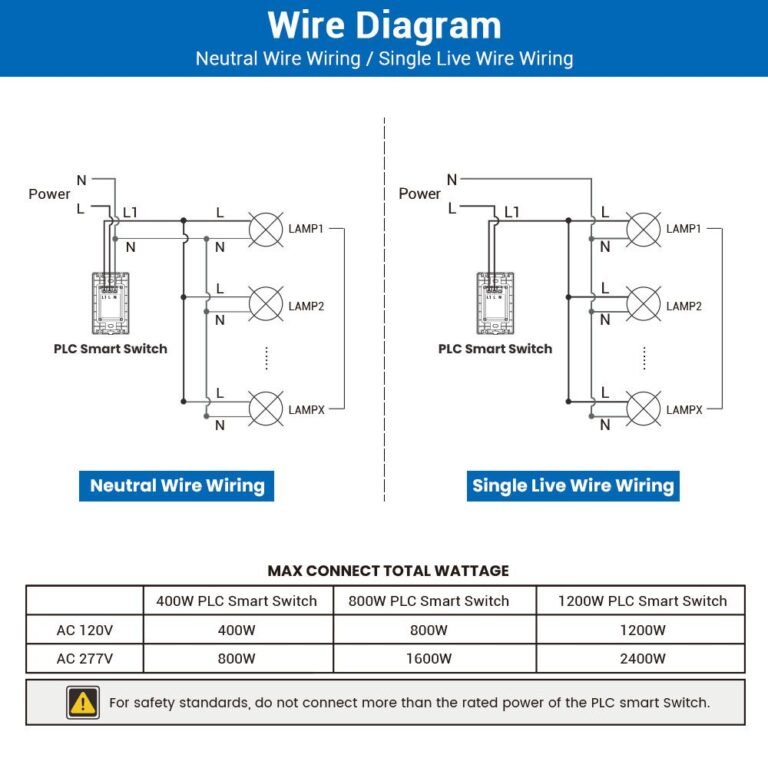
Wiring an electrician already knows

It wires like a normal switch. Because it is one.

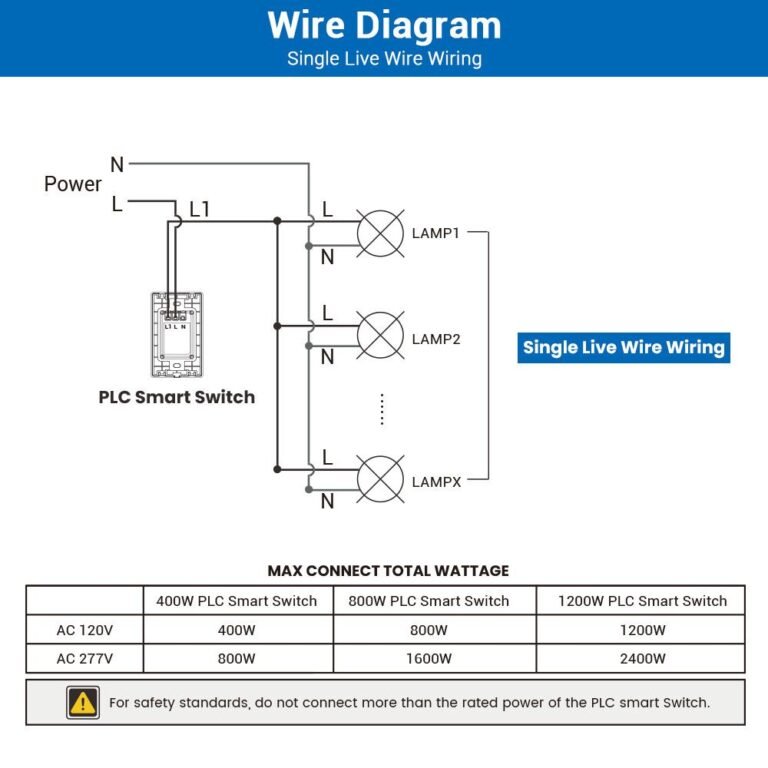
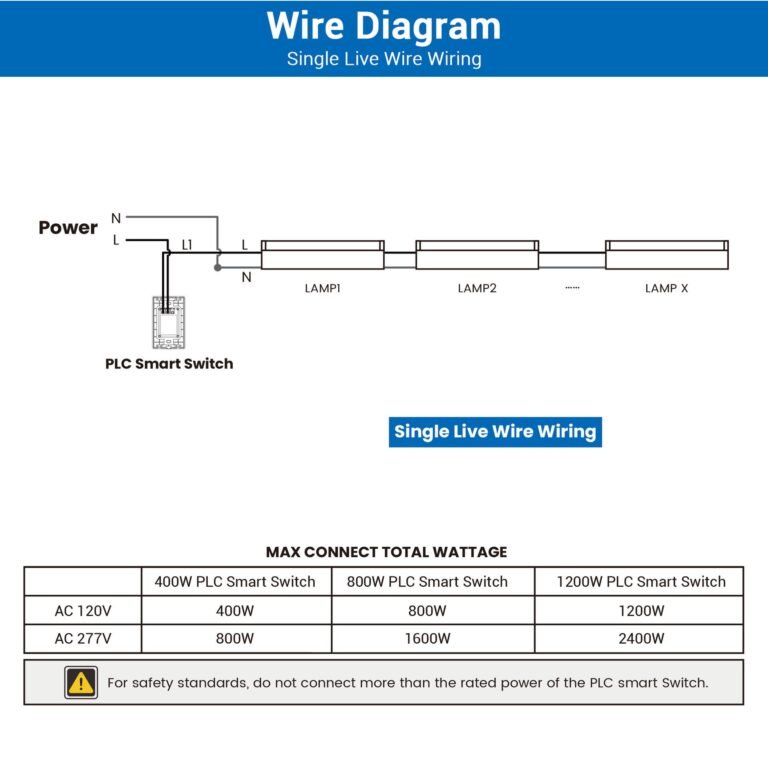
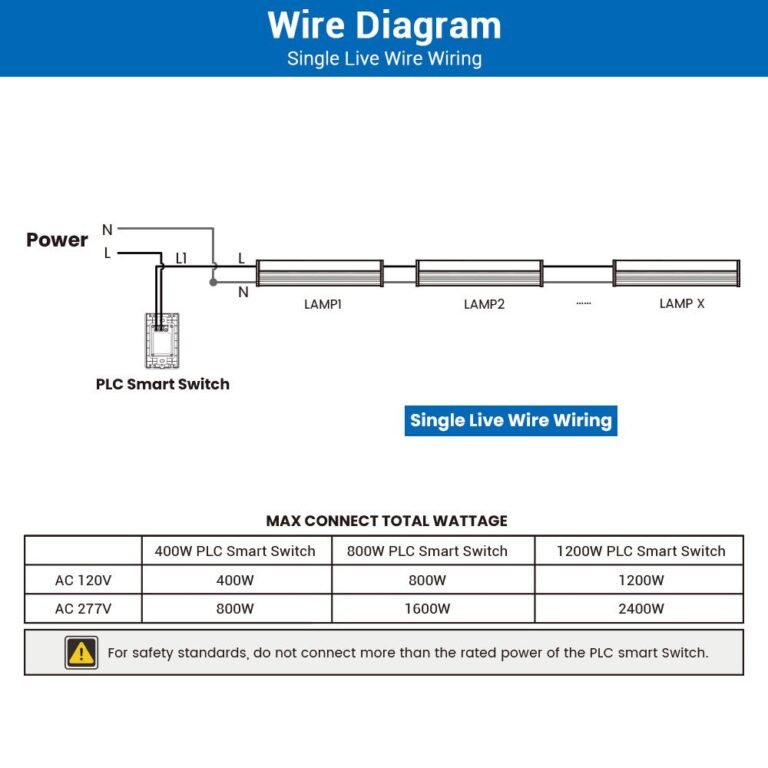
One live wire, or add a neutral if you have one. The hub connects along the power wire you already have, on to every device down the line. No data cable. Nothing to program. No special tools.

MAINSpower inLNZapPLCHUB · POWERLINE GATEWAYL1existing wiringdata on this lineNODE 1NODE 2NODE 3NODE 4NODE X
Live + data Neutral (optional) Device with a ZapNode, connects itself on power up

How much it can power

One hub runs many devices on the same line. Add up the wattage on that line, then pick the size that fits.

400W Hub

AC 120V 400WAC 277V 800W

800W Hub

AC 120V 800WAC 277V 1600W

1200W Hub

AC 120V 1200WAC 277V 2400W

Pick a hub that fits the load. Never go over its rated power.

Higher voltage carries more. The same hub handles about double at 277V.

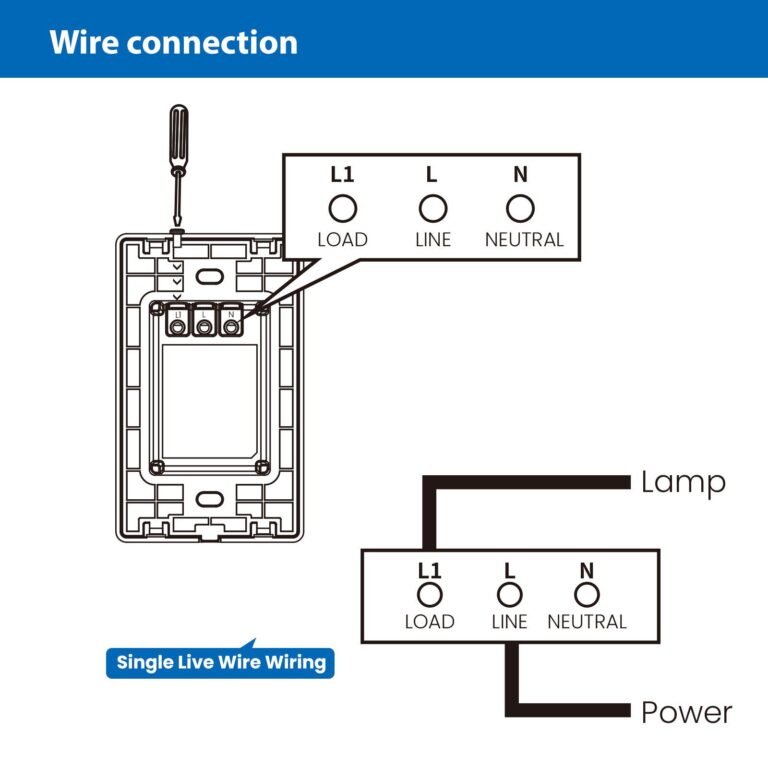
Three connections, that is it

L1 sends power out to the devices. L brings power in from the mains. N is the neutral, only if you use it. An electrician wires it like any normal switch.

Single live wire

No neutral wire in the box? No problem. Just line and load, the way most switches are already wired.

L = LINE · L1 = LOAD

With a neutral wire

Have a neutral wire? Connect it too. Same hub, same wiring, either way.

L = LINE · N = NEUTRAL · L1 = LOAD

Under the hood

The technical details, in plain sight.

Everything an engineer needs to see how ZapPLC fits. Figures below are sample targets for preview and are confirmed on the full spec sheet.

Communication standard
G3-PLC compatible
Signal reach
Over 0.73 miles (1.2 km) on existing wiring
Wiring needed
Single live wire, no neutral required
Direction
Two-way, send and receive
Data rate
Up to 300 kbps (sample)
Response time
Under 200 ms, device to hub (sample)
Supply voltage
AC 100 to 277 V, 50 / 60 Hz
Operating temperature
-20 C to 60 C (sample)
Security
AES-128 encryption, per-device keys
How you integrate it
Module, driver, or embedded chip

Sample figures shown for preview. Final specifications available on request.

Secure by design

  • Your data stays inside the building's wiring, not broadcast through the open air where anything can listen.
  • Every message is scrambled with AES-128, the same family of protection banks rely on.
  • Each device carries its own key, so nothing else on the line can read or fake its messages.

Core benefits

Built for the realities of a real building.

Secure

Your data travels inside the building's own wiring, not through the open air where anything can pick it up.

Reliable

A wired path stays steady. It does not slow down when the air gets crowded with wireless signals.

Simple

Little to set up and easy to fix. Less to learn, less to go wrong.

Cost-effective

Lower install cost, less upkeep, and faster rollout. Better numbers on every project.

Scalable

Works the same in one room or a whole factory. Add as many devices as you need.

Works with your setup

Plays nicely with Matter, Alexa, building systems and more, so it fits what you already use.

Why partners choose ZapPLC

A simpler way to connect powered devices.

Wireless has its place, but it is not always the best fit for powered devices. ZapPLC adds a steadier path that cuts wireless traffic and makes things more reliable, more secure, and easier to grow.

How data travels

ZapPLC

Through the building's wiring

Wireless only

Through the open air

The airwaves

ZapPLC

Less wireless traffic

Wireless only

Can get crowded and jam

Cost per device

ZapPLC

Lower, no radio in each device

Wireless only

A wireless part in every device

Setup

ZapPLC

Devices connect on their own

Wireless only

More pairing and fixing

Growing bigger

ZapPLC

Stays simple as you add devices

Wireless only

Gets more tangled as it grows

You do not have to drop wireless. ZapPLC just removes the need for every powered device to depend on it.

Applications

One technology. Many industries.

ZapPLC gives powered devices a way to talk, across all kinds of buildings and products.

Lighting

Lighting

Let lights talk over the power wire, instead of a radio in every fixture.

Building controls

Building controls

Connect devices to the building systems you already run, over one steady path.

Appliances

Appliances

Add smarts to powered appliances without leaning on wireless.

Industrial equipment

Industrial equipment

Link switches, controllers and machines on the factory floor.

Energy management

Energy management

Track, control and automate powered systems more easily.

Future devices

Future devices

Almost any powered product can become a connected one.

Why now

The market is ready.The wiring is already there.

Smart buildings are booming, wireless is buckling under the load, and billions in upgrade money is on the table. The moment for a simpler way to connect is right now.

$5B+

in rebates

on the table for building upgrades through 2032, and owners are spending it now.

Smart buildings

The new default. Every one needs devices that talk without dropping out.

Retrofit boom

Upgrades everywhere, and most reuse the wiring already in the walls. Exactly how ZapPLC works.

Labor shortage

Skilled installers are scarce. Cut the setup time and you win the job.

Wireless overload

Crowded airwaves and flaky mesh have owners hunting for something steadier.

The wiring is already in every building, waiting to carry data. ZapPLC turns that into the opening.

Integration

Works with what you already have. It does not replace it.

ZapPLC sits underneath the system you already use. Keep your software, your controls and your app. We simply make your devices reachable over the power wire, so your system can talk to them.

Matter, Alexa, building systems
ZapPLC hub
Existing wiring
Your devices
A building where every powered device is connected upward to cloud, smart-home and building-management platforms over the existing wiring

Plays nicely with the platforms you already use

MatterAmazon AlexaApple HomeGoogle HomeSmartThingsZigbeeBluetooth
Homes setting

Homes

  • Matter
  • Alexa
  • Apple Home
  • Google Home
  • SmartThings
Commercial setting

Commercial

  • Lighting controls
  • Building controls
Enterprise setting

Enterprise

  • Building management systems
  • IoT platforms
  • Custom integrations
Built for:Lighting manufacturers·Appliance manufacturers·Controls companies·OEM manufacturers·Distributors·System integrators

From the field

Installers and integrators get it immediately.

Early reactions from the electricians and contractors who have put ZapPLC to work. Lighting is where it is proving out first, and the same wiring carries any powered device.

Way better than current NLC wireless solutions. I've worked with several wireless NLC providers and they all have connectivity issues. Fixtures lose connection and re-commissioning is nearly impossible.
Allan G.Allan G.Lighting Solutions
We're electricians, not software engineers. If Zap lets us do our job quickly without training everyone to become a software engineer, it's easier for us and cheaper for the end user. Connect, go, done.
Jerson S.Jerson S.Energy Contractor
End users want to flick a switch and see light. Zap's simple model makes integration into our existing product line pretty seamless.
Rueben B.Rueben B.Electrical

Technology roadmap

From productsto platform.

Today

Phase 1

  • ZapPLC switches and controllers, and a way for powered devices to talk over the wire.
Near term

Phase 2

  • Small add-on parts that bring devices you already own onto ZapPLC.
Future

Phase 3

  • Built-in parts and chips, plus licensing so manufacturers can add ZapPLC to their products.
Long-term vision

Phase 4

  • ZapPLC becomes a common, trusted way for powered devices to talk to each other.

The company

A technology company, built on protected IP.

ZapPLC is a powerline communication company based in Markham, Ontario. We design the technology that lets powered devices talk over ordinary electrical wiring, and we partner with manufacturers to build it into their products.

The ZapPLC powerline communication gateway, a compact electronics module with status lights and wiring terminalsThe ZapHUB gateway

Patent-pending technology

Our powerline communication methods are patent-pending, so partners build on protected ground.

Standards-friendly

Built to work with G3-PLC and the control systems the industry already uses.

Made to license

Available as a module, a driver, or an embedded chip. Whatever fits your product.

North American base

Headquartered in Markham, Ontario, working with manufacturers and partners across the region.

1

core technology, many products

3

ways to integrate: module, driver, chip

0.73+ mi

proven signal reach

Questions

Answers before you ask.

The things people want to know before they reach out.

Does it work with my existing wiring?

Yes. That is the whole idea. ZapPLC runs on the electrical wiring already in the building, so there is no new data cable to pull.

Do I need a neutral wire?

No. ZapPLC works with a single live wire. If you have a neutral you can use it, but it is not required.

Is it secure?

Yes. Your data stays inside the wiring instead of going through the open air, and every message is encrypted with a key that belongs to that one device.

Will the data interfere with the power?

No. The data signal rides alongside the power without changing how your devices run.

How fast is it?

Fast enough for control, monitoring and automation, with typical response times well under a second.

How do I add it to my product?

Three ways, depending on what you build: a small module, a driver, or an embedded chip.

Does it replace the system I already use?

No. ZapPLC sits underneath and works with the controls, apps and building systems you already run.

What does a partnership look like?

Tell us about your products, we map the fit, then we lay out testing, integration and licensing options. Start with the form below.

Become a partner

Ready to build smarter connected products?

ZapPLC gives manufacturers and technology partners a practical new way to connect powered devices.

A team of engineers and product managers collaborating over circuit boards and device schematics
Markets of interest

We'll only use your details to respond to this inquiry.